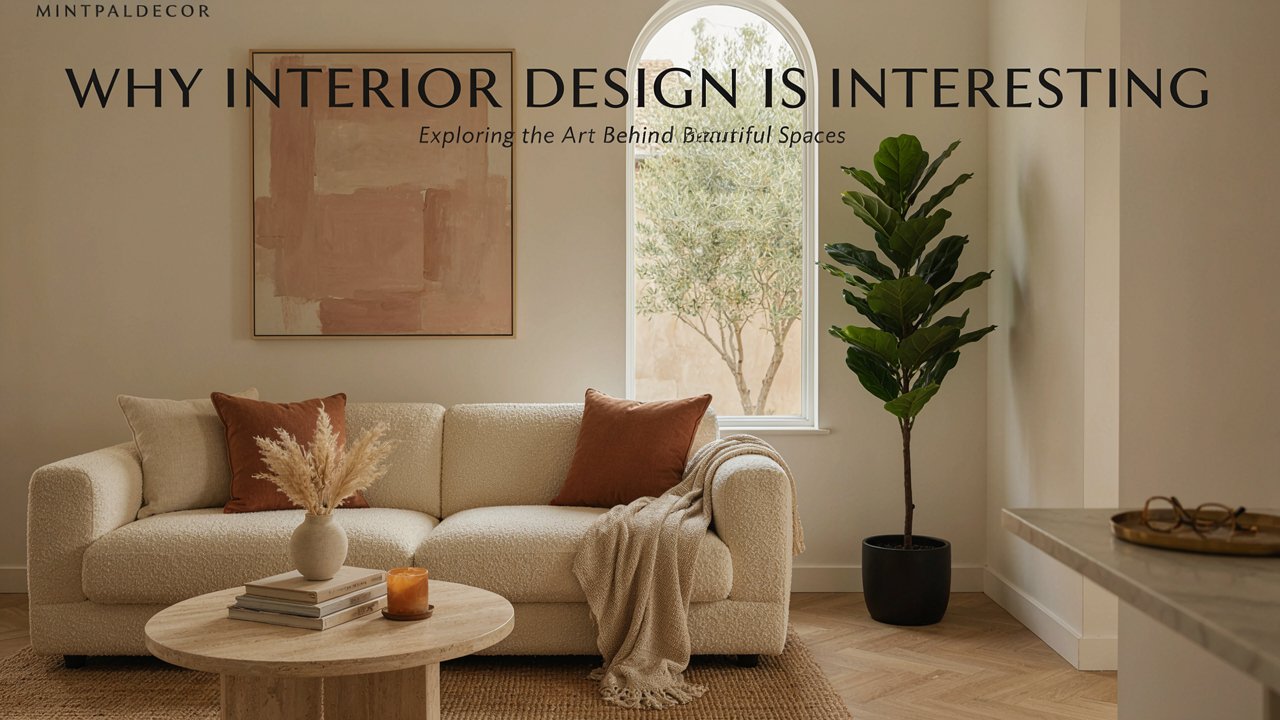
Interior design is much more than choosing attractive furniture or painting walls in fashionable colors. It is the process of turning an ordinary space into an environment that reflects personality, supports everyday activities, and creates a particular emotional atmosphere. For many people, learning why interior design is interesting mintpaldecor starts with realizing how many creative and practical decisions are involved in designing a home.
From selecting materials and colors to planning lighting and arranging furniture, every decision can change the way a room looks and feels. Interior design combines creativity with problem-solving, making it an engaging subject for homeowners, students, professionals, and anyone interested in improving their surroundings.
Interior Design Combines Creativity and Practical Thinking
One of the most interesting aspects of interior design is that it requires both imagination and practical thinking.
A designer may have a beautiful idea for a room, but that idea must also work for the people who use the space. Furniture needs to be comfortable, pathways need to remain accessible, storage should be practical, and lighting should support everyday activities.
This combination makes interior design different from simply decorating a room. It involves finding creative solutions to real-world problems.
Every Room Tells a Different Story
Homes contain different spaces, and each space can communicate something unique.
A living room may be designed to encourage conversation and relaxation. A bedroom can focus on calmness and comfort. A home office may prioritize concentration and organization, while a kitchen needs efficiency and easy movement.
Because every room has a different purpose, there is no single design formula that works everywhere. This creates endless opportunities to experiment with layouts, materials, colors, and furniture.
Colors Can Change the Feeling of a Space
Color is one of the most fascinating elements of interior design. Different colors can influence how people perceive a room.
Light colors can make a space feel brighter and more open, while deeper shades can create a more intimate atmosphere. Neutral colors provide flexibility, allowing furniture and accessories to become focal points.
Designers also consider how colors interact with natural and artificial lighting. The same paint color can appear different in the morning, afternoon, and evening.
This relationship between color and light is one reason interior design remains an interesting creative field.
Furniture Arrangement Is a Design Challenge
Furniture placement may seem simple, but it can significantly affect how a room functions.
A designer must consider the size of the room, doors, windows, walkways, focal points, and the activities that take place there.
For example, a living room may need enough seating for several people without becoming overcrowded. A dining area requires sufficient space to pull chairs away from the table. A bedroom needs comfortable movement around the bed.
Finding the right balance between appearance and functionality can become an enjoyable design challenge.
Materials Add Character
Interior design also involves experimenting with different materials. Wood, stone, glass, metal, fabric, ceramic, and natural fibers can all create different visual and tactile experiences.
A room with polished surfaces may feel modern and sophisticated, while natural wood and woven materials can create warmth.
Combining contrasting materials is another way designers create depth. Smooth surfaces can be paired with textured fabrics, while hard materials can be balanced with soft furnishings.
Lighting Can Transform a Room
Lighting is another reason interior design is so fascinating.
A room can have beautiful furniture and colors but still look uninviting if it has poor lighting. Designers consider natural light, ceiling fixtures, lamps, wall lights, and accent lighting when creating an interior.
Layered lighting allows homeowners to change the atmosphere according to the time of day and activity.
Bright task lighting can support cooking or reading, while softer lighting can make an evening living room feel more relaxing.
Interior Design Reflects Personality
A home should not look like a showroom. One of the most rewarding aspects of interior design is the ability to express personality through the environment.
Artwork, photographs, books, furniture, colors, plants, and personal objects can all communicate something about the people who live there.
Two people can have rooms with the same dimensions and completely different results because their preferences and lifestyles are different.
Design Continues to Evolve
Interior design is never completely static. New materials, technologies, lifestyles, and architectural ideas continue to influence how people use their homes.
Smart-home technology, multifunctional furniture, flexible workspaces, sustainable materials, and space-efficient designs are examples of how modern living can influence interiors.
This constant evolution keeps interior design fresh and provides new ideas for people to explore.
Interior Design Encourages Problem Solving
Small rooms, awkward corners, limited storage, unusual layouts, and insufficient natural light can all create design problems.
Instead of seeing these limitations as obstacles, designers often treat them as creative challenges.
A narrow hallway might benefit from vertical storage. An unused corner could become a reading area. A small room might use multifunctional furniture to serve several purposes.
The process of finding these solutions can be highly satisfying.
You Do Not Need to Be a Professional to Enjoy Design
Anyone can explore interior design. You can begin by studying your own home and asking simple questions.
Does the furniture arrangement work well? Is the lighting sufficient? Are there too many decorative objects? Could storage be improved? Would another color create a better atmosphere?
These observations help develop a stronger understanding of design principles.
Frequently Asked Questions
Why is interior design interesting?
Interior design is interesting because it combines creativity, psychology, organization, architecture, materials, color, lighting, and practical problem-solving.
Is interior design only about decoration?
No. Decoration is one part of interior design. Interior design also considers functionality, space planning, lighting, materials, comfort, and how people use a space.
Can anyone learn interior design?
Yes. Basic design principles can be learned through practice, observation, research, and experimentation.
Why is color important in interior design?
Color influences the visual character of a room and can affect how large, bright, warm, calm, or energetic a space appears.
What is the most creative part of interior design?
This depends on the person. Some enjoy color selection, while others prefer furniture planning, lighting, materials, styling, or solving difficult space problems.
Conclusion
Interior design is interesting because it brings together creativity and everyday life. A designer can transform an empty or uncomfortable room into a space that is attractive, functional, and personal. From color and lighting to furniture, materials, and space planning, there are countless details to explore.
Understanding why interior design is interesting mintpaldecor can encourage anyone to look at their surroundings differently. Even small design decisions can influence how people experience their homes, making interior design both a creative activity and a practical skill.