A metal screen door provides ventilation, natural light, and protection from insects while allowing fresh air into your home. Over time, however, regular use and exposure to weather can cause problems such as damaged screens, loose hinges, bent frames, broken handles, or doors that no longer close properly.
Learning how to repair a metal screen door problems can help homeowners handle minor issues before they become more expensive. Some repairs are simple enough to complete with basic tools, while more serious frame or structural damage may require professional assistance.
Common Problems With Metal Screen Doors
Metal screen doors can develop different problems depending on their age, material, and exposure to weather. Identifying the specific problem is the first step toward choosing the right repair.
Common issues include:
- Torn or loose screen mesh
- Bent metal frames
- Loose hinges
- Broken handles
- Damaged door closers
- Loose screws
- Misaligned doors
- Doors that stick
- Gaps around the frame
- Rust or corrosion
A careful inspection can help determine whether you need a small adjustment or a more extensive repair.
How to Repair a Damaged Screen
A damaged screen is one of the most common problems with a screen door. Small tears may sometimes be patched, while larger damaged sections usually need replacement.
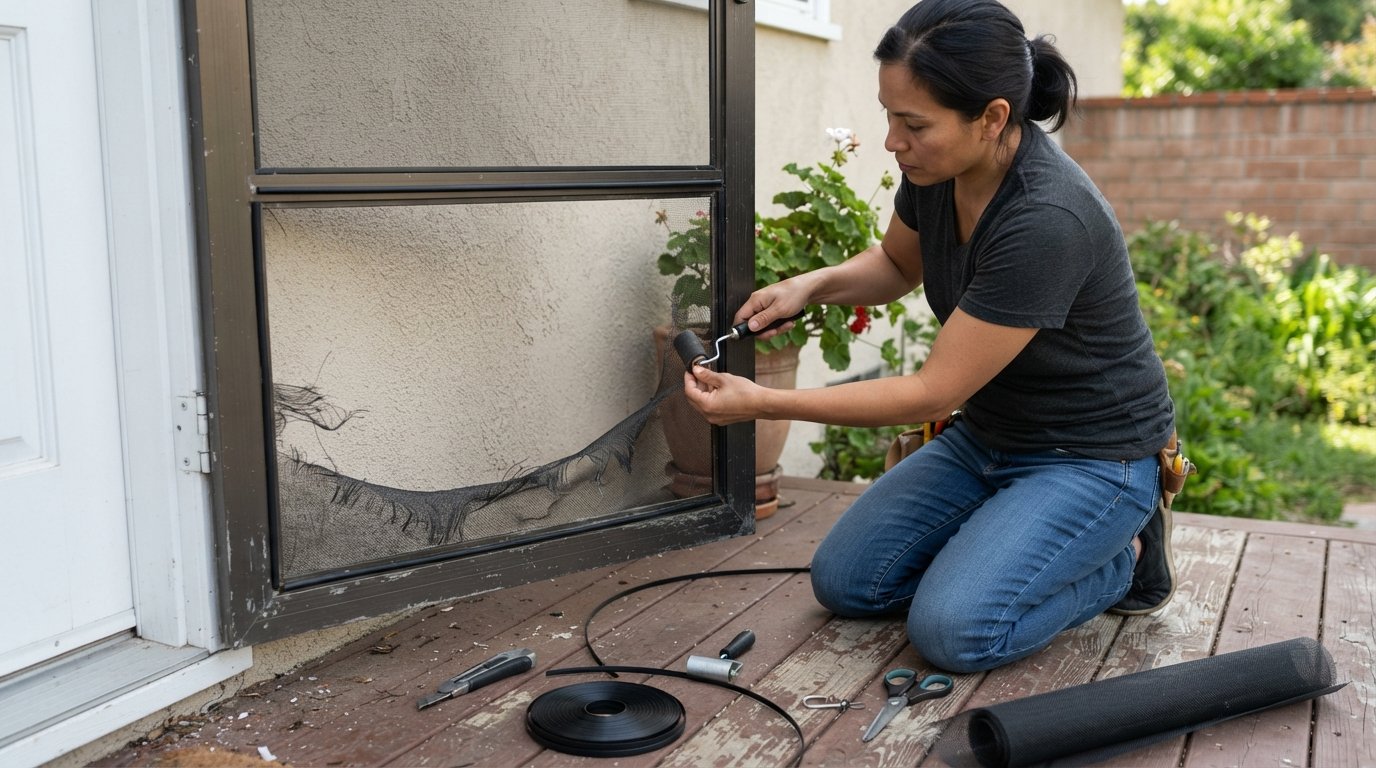
Start by removing the damaged screen material. If the screen is held in place with a retaining strip or spline, carefully remove it without damaging the surrounding frame.
Measure the opening and cut a replacement screen slightly larger than the area. Position the new mesh evenly and secure it using the appropriate retaining material.
Avoid pulling the mesh excessively tight because too much tension can distort the frame. Once the screen is secured, trim away the excess material and check the edges for gaps.
Repairing a Bent Metal Frame
A bent frame can prevent a screen door from opening, closing, or fitting correctly.
First, identify where the frame has become distorted. Minor bends may sometimes be corrected carefully using appropriate hand tools.
Avoid applying excessive force because metal can develop permanent creases or cracks. If the frame has severe structural damage, replacing the affected section or the entire door may be more practical.
Before attempting a frame repair, check whether the problem is actually caused by loose hinges or incorrect alignment.
Fixing Loose or Damaged Hinges
Hinges carry much of the door’s weight, so loose hardware can cause the door to sag or scrape against the frame.
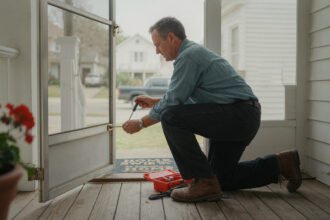
Check each hinge and tighten loose screws. If the screws no longer hold securely, the mounting area may need additional repair.
A damaged hinge should be replaced with a compatible component. Make sure the replacement hardware is suitable for the door’s weight and construction.
After tightening or replacing the hinges, open and close the door several times to check its alignment.
Fixing a Screen Door That Does Not Close Properly
A metal screen door that refuses to close completely may have several possible causes.
The door may be:
- Misaligned
- Sagging
- Rubbing against the frame
- Affected by loose hinges
- Blocked by debris
- Damaged around the latch
- Distorted because of frame damage
Start with simple checks. Clean the track or surrounding area if necessary and inspect the hinges and screws.
If the door is sagging, adjusting the hinges may solve the problem. If the frame itself is bent, however, a more involved repair may be necessary.
Repairing a Broken Handle or Latch
Handles and latches experience frequent use, so they can eventually become loose or fail.
Remove the damaged hardware and inspect the mounting holes. Choose replacement hardware that matches the existing door design and mounting configuration.
After installing the new handle or latch, test it several times. The latch should engage securely without requiring excessive force.
A properly functioning latch is important because it keeps the screen door closed and helps prevent unwanted gaps.
Dealing With Rust and Corrosion
Metal doors can develop rust when their protective finish becomes damaged and moisture reaches the metal underneath.
Small areas of surface rust can often be cleaned and treated. Remove loose rust and prepare the surface before applying an appropriate protective coating.
If corrosion has caused holes, deep pitting, or significant weakening, a simple cosmetic treatment may not be enough. Extensive corrosion may indicate that replacement is more practical than continued repair.
Keeping the door clean and protecting exposed metal can help reduce future corrosion.
Check the Door Closer
Many screen doors use a pneumatic or spring-loaded closer to control how the door shuts.
If the door closes too quickly, too slowly, or fails to close completely, inspect the closer and its mounting points.
A loose closer can often be secured by tightening the mounting hardware. If the mechanism itself is damaged, replacement may be necessary.
Avoid forcing the door closed because excessive pressure can damage the closer or frame.
Tools You May Need
The tools required depend on the type of repair. Basic projects may require only a few items, such as:
- Screwdriver
- Pliers
- Measuring tape
- Utility knife
- Replacement screen mesh
- Replacement spline or retaining material
- Sandpaper
- Appropriate screws
- Replacement hinges or hardware
For more complicated metal frame repairs, additional tools and experience may be necessary.
When Should You Replace Instead of Repair?
Not every damaged screen door should be repaired. Replacement may make more sense when the frame is severely bent, the metal has extensive corrosion, or multiple components have failed.
Repair is generally more practical when the damage is limited to a screen, hinge, handle, latch, or small area of surface corrosion.
Consider replacement when:
- The frame is badly distorted
- Large sections are rusted through
- Hardware repeatedly fails
- The door no longer fits the opening
- Repair costs approach the price of a new door
Comparing repair costs with replacement costs can help you make a practical decision.
How to Prevent Future Damage
Regular maintenance can extend the life of a metal screen door.
Keep hinges and moving parts clean and check screws periodically. Inspect the screen for small tears before they become larger openings.
You should also look for early signs of rust and address damaged protective finishes promptly.
Avoid slamming the door, and make sure children and pets do not place excessive pressure on the screen. These simple habits can reduce unnecessary wear.
Final Thoughts
Knowing how to repair metal screen door problems can help homeowners maintain a functional and attractive entryway. Many common issues, including damaged screens, loose hinges, broken handles, and minor alignment problems, can be addressed with basic tools and careful inspection.
However, severe frame damage, extensive corrosion, or structural problems may require professional repair or complete replacement.
By inspecting the door regularly, fixing small problems early, and protecting the metal from moisture and corrosion, you can help extend the useful life of your screen door and keep it working properly.