Soffits and fascia are important components of a home’s roofline. They help protect the edges of the roof, improve the finished appearance of the exterior, and support proper attic ventilation and water management. When installed correctly, these components can provide long-term protection against weather and moisture.
Understanding soffit and fascia installation can help homeowners make better decisions when building a new roofline, replacing damaged materials, or upgrading an older home.
What Are Soffits and Fascia?
Before starting an installation project, it is important to understand the role of each component.
A soffit is the material installed underneath the roof overhang. It covers the underside of the eaves and may include ventilation openings that allow air to enter the attic.
Fascia is the vertical trim board positioned along the edge of the roof. It provides a clean finished appearance and commonly serves as a mounting surface for gutters.
Together, soffits and fascia create a finished roofline while helping protect the underlying structure.
Why Proper Installation Matters
Correct installation is important because poorly fitted soffits and fascia can create gaps where water, insects, birds, and debris can enter.
Proper installation can also help maintain airflow through ventilated soffits. Good attic ventilation can help manage heat and moisture, depending on the home’s overall ventilation design.
A properly installed roofline should also complement the siding, roofing, gutters, and other exterior features.
Choosing the Right Soffit and Fascia Materials
Several materials are available for soffit and fascia installation.
Wood
Wood provides a traditional appearance and can be painted to match the home. However, it requires regular maintenance because prolonged exposure to moisture can cause deterioration.
Vinyl
Vinyl soffits are lightweight and generally require less maintenance. They are available in various colors and styles and can be a practical option for many homes.
Aluminum
Aluminum is another popular choice because it is lightweight and resistant to many common forms of exterior deterioration. It can also provide a clean, modern appearance.
The best material depends on the home’s architectural style, climate, budget, and maintenance preferences.
Preparing for Installation
Proper preparation can make the installation process smoother.
The existing roofline should be inspected before new materials are installed. Any water leaks, rotten wood, structural damage, or gutter problems should be addressed first.
The installation area should also be measured carefully. Accurate measurements help reduce material waste and ensure that replacement components fit correctly.
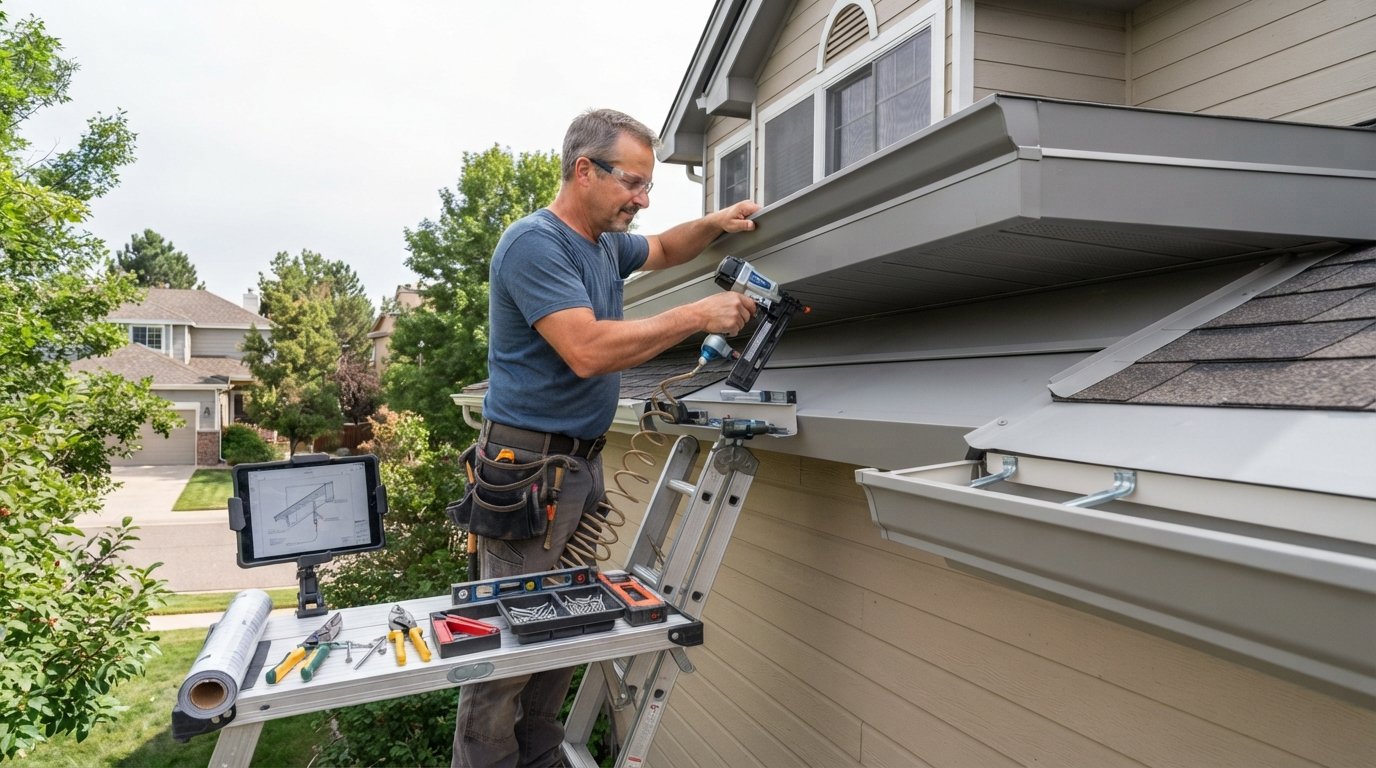
Before starting, gather the necessary materials and equipment, including the selected soffit and fascia material, fasteners, trim pieces, measuring tools, and appropriate safety equipment.
Installing the Fascia
Fascia installation generally begins with preparing the edge of the roof.
If an existing fascia is being replaced, damaged sections should be removed carefully. The supporting surface should then be inspected for rot or other deterioration.
New fascia boards or panels can then be measured and cut to the required dimensions.
The material should be positioned securely along the roof edge. Fasteners should be appropriate for the selected material and installed according to the manufacturer’s recommendations.
The finished fascia should form a straight, secure line along the roof edge.
Installing the Soffit
After the fascia area has been prepared, soffit panels can be installed beneath the roof overhang.
The soffit should fit securely while allowing for any required ventilation openings. Ventilated soffits should not be blocked by insulation, debris, or other materials.
Panels should be measured carefully before cutting. Proper alignment is important because uneven panels can create visible gaps and affect the appearance of the finished roofline.
Depending on the system, soffit panels may connect with channels, trim pieces, or other manufacturer-specific components.
Pay Attention to Ventilation
Ventilation is one of the most important considerations during soffit and fascia installation.
Many homes use soffit vents as part of an attic ventilation system. These vents allow outside air to enter the attic, while other ventilation components provide a path for warm or moist air to leave.
However, soffit ventilation needs to work as part of the home’s complete ventilation system. Simply adding vents does not automatically guarantee proper attic airflow.
Make sure ventilation openings remain unobstructed and follow applicable building requirements and manufacturer instructions.
Installing Gutters With the Fascia
Fascia and gutters often work together. Gutters collect rainwater from the roof and direct it toward downspouts.
Because gutters may attach to or near the fascia, the fascia must be strong enough to provide reliable support.
If the existing fascia is weak or rotten, simply installing new gutters may not solve the problem. The underlying damage should be repaired first.
Proper gutter positioning can also help prevent water from repeatedly reaching the fascia and soffit.
Common Installation Mistakes
Several mistakes can reduce the effectiveness and appearance of a new roofline.
Ignoring Existing Water Damage
Installing new materials over rotten or wet wood can hide the problem rather than solve it.
Blocking Ventilation
Covering or obstructing soffit vents can reduce airflow and interfere with the intended ventilation system.
Using Incorrect Fasteners
Different materials may require different fasteners. Using unsuitable hardware can lead to corrosion, loosening, or material damage.
Poor Measurements
Incorrect measurements can create gaps, uneven lines, and unnecessary material waste.
Neglecting Gutters
A new fascia installation should take the existing drainage system into account. Poorly functioning gutters can expose the new materials to unnecessary moisture.
Should You Install Soffits and Fascia Yourself?
A small, straightforward project may be manageable for an experienced homeowner with the correct tools and knowledge.
However, roofline installation often requires ladder work and working around roof edges. Larger projects can also reveal hidden moisture or structural damage.
Professional installation may be a better choice when:
- Large sections need replacement
- Rot or structural damage is present
- The roofline is difficult to access
- Extensive gutter work is required
- Ventilation needs to be redesigned
- The project involves significant roof repairs
Safety should always be a priority when working at height.
How to Maintain New Soffits and Fascia
After installation, regular maintenance can help extend the life of the materials.
Inspect the roofline periodically for cracks, loose panels, stains, or gaps. Keep gutters and downspouts clean so water can drain properly.
You should also check ventilation openings for dirt, insects, leaves, or other debris.
Wood components may require periodic painting or sealing, while vinyl and aluminum generally require routine cleaning and inspection.
Final Thoughts
A well-planned soffit and fascia installation can improve the appearance and protection of a home’s roofline while supporting proper ventilation and gutter performance.
Choosing suitable materials, preparing the existing structure, maintaining ventilation openings, and addressing water problems before installation are all important steps.
Whether you are replacing an aging roofline or completing a new exterior project, careful planning and correct installation can help your soffits and fascia perform effectively for years. When the work involves significant height, structural damage, or complex roof details, professional assistance can provide a safer and more reliable result.