
Introduction
A damaged screen door can be annoying, especially during warm weather when you want fresh air without letting insects into your home. A small tear, loose mesh, damaged spline, or door that no longer slides properly can make an otherwise useful screen door frustrating to use.
The good news is that many screen door problems can be repaired without replacing the entire door. With a few basic tools and the right replacement materials, homeowners can often handle common repairs themselves.
If you are wondering how to repair a screen door, the first step is identifying exactly what is wrong. A tiny hole in the mesh requires a different solution from a completely torn screen. Likewise, a sliding door that sticks may have a roller or track problem rather than a screen problem.
This guide walks you through the most common repairs, from small holes and damaged mesh to loose spline, dirty tracks, and worn rollers.
Quick Highlights
- Small holes can often be patched instead of replacing the entire screen.
- Large tears usually require replacement mesh.
- The spline is the flexible cord that holds the screen tightly inside the frame.
- A spline roller makes screen replacement much easier.
- Loose screens can sometimes be reseated without replacing the entire mesh.
- Dirty tracks can cause sliding screen doors to stick.
- Worn rollers may need adjustment or replacement.
- Always work on a flat, stable surface when replacing screen mesh.
What You Need for Screen Door Repair
Before starting your screen door repair, gather the tools and materials you may need.
For a basic mesh replacement, you will generally need:
- Replacement screen mesh
- New or reusable spline
- Spline roller
- Flathead screwdriver
- Utility knife
- Scissors
- Measuring tape
- Work gloves
- A clean, flat work surface
A spline roller is especially useful because it allows you to press the screen and spline into the frame groove evenly. Manufacturer and home-improvement guides commonly recommend using a spline roller rather than trying to force the material into place with a screwdriver.
You may also need replacement rollers if your sliding screen door does not move properly.
Step 1: Identify the Problem
Before taking the door apart, inspect it carefully.
Look for:
- Small holes
- Large tears
- Loose mesh
- Missing or damaged spline
- Bent frame sections
- A door that sticks
- Rollers that do not turn smoothly
- A damaged latch
- Dirt or debris in the track
This simple inspection can prevent unnecessary work.
For example, if the mesh is intact but the door is difficult to slide, replacing the screen fabric will not solve the problem. The issue may be the rollers or track.
Step 2: Decide Whether to Patch or Replace the Screen

A small hole does not always require complete screen replacement.
Small tears and holes can often be repaired with a screen patch. Larger holes, multiple tears, or severely damaged mesh are usually better candidates for complete replacement. Lowe’s similarly notes that patches are best suited to small tears or holes, while extensive damage may justify replacing the screen material.
When a Patch Makes Sense
A patch can be appropriate when:
- The hole is relatively small.
- The surrounding screen is still strong.
- The frame is in good condition.
- You want a quick repair.
When to Replace the Mesh
Consider replacing the entire screen when:
- There are several large holes.
- The mesh is brittle or badly worn.
- The screen has pulled away from multiple sides.
- Pets have repeatedly damaged the mesh.
- The existing screen looks stretched or distorted.
Replacing the mesh can give the door a cleaner appearance and address multiple weak areas at once.
Step 3: Remove the Screen Door
If your door is a sliding screen door, carefully remove it from its track according to the manufacturer’s design.
Some doors have adjustment screws that control the position of the rollers. If necessary, loosen or adjust them so the door can be lifted from the track.
Don’t force the door if it seems stuck. Excessive pressure can bend the frame.
Once removed, place the screen door on a clean, flat surface.
A flat work surface is important because it helps keep the frame stable while you install the new screen.
Step 4: Remove the Old Spline
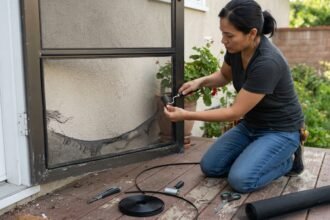
The spline is the flexible rubber or vinyl cord that sits inside the groove around the screen frame. It holds the mesh securely in place.
Find the end of the spline and gently lift it from the groove using a flathead screwdriver or spline-removal tool.
Once you have lifted a section, pull the spline carefully around the frame.
If the spline is still flexible and in good condition, it may be reusable. However, if it is brittle, damaged, stretched, or old, replacing it can provide a more reliable repair. The replacement spline should fit the frame’s groove correctly.
Step 5: Remove the Damaged Mesh
Once the spline is removed, the old screen mesh should come away from the frame.
Remove it completely and clean dirt or debris from the spline channel.
Take your time during this step. A clean groove makes installing the replacement screen easier.
If the frame has dirt buildup, wipe it with a suitable cloth before continuing.
Step 6: Measure and Position the New Screen
Roll out the replacement mesh over the frame.
The new screen should overlap the frame and its spline groove on all sides. Leaving extra material gives you enough room to secure the screen properly before trimming the excess.
Do not cut the mesh exactly to the size of the opening before installing it. It is much easier to trim the extra material after the screen has been secured.
Make sure the mesh is positioned straight and evenly across the frame.
Step 7: Secure the Screen With Spline
This is the most important part of replacing a screen.
Place the spline over the screen and press it into the groove using the spline roller.
Start at one corner and work along the frame.
As you roll the spline into the channel, keep the screen reasonably straight and taut. Do not pull the mesh excessively tight.
The goal is to create a smooth, firm screen without wrinkles.
Home-improvement installation guidance recommends securing the mesh with a spline roller and maintaining tension without over-stretching the material.
Work Around the Frame
A useful approach is to secure one side, then move to the opposite side while keeping the screen centered.
Continue with the remaining sides until the entire perimeter is secured.
Avoid rushing around the corners. Corners are where excessive tension can cause the mesh to bunch or distort.
Step 8: Trim the Excess Mesh
After the spline has secured all four sides, inspect the screen.
Use a sharp utility knife to carefully trim the excess mesh along the outside edge of the spline groove.
Keep the blade controlled and cut away from your hands.
Be especially careful not to cut into the newly installed screen or damage the spline.
The final result should have a clean edge with the screen securely held inside the frame.
Step 9: Check the Screen Tension
Look across the entire screen before reinstalling the door.
The mesh should be reasonably smooth and taut.
If you see a large wrinkle or loose section, don’t ignore it. Depending on where the problem is located, you may be able to remove a section of spline and reseat the mesh.
Avoid pulling the screen excessively because too much tension can distort the frame or cause problems at the corners.
How to Fix a Screen Door With a Small Hole
If the rest of the screen is in good condition, you may not need to replace the entire mesh.
For a small hole, clean the surrounding area and use a suitable screen repair patch.
The patch should completely cover the damaged area and be securely attached according to the patch manufacturer’s instructions.
Small repairs are generally more practical than replacing a full screen when the surrounding mesh is still strong.
For a large or badly torn section, replacement is usually a cleaner long-term solution.
How to Fix a Sliding Screen Door That Sticks
If the mesh looks fine but the door is difficult to slide, check the track and rollers.
Clean the Track
Dirt, grit, hair, and other debris can interfere with smooth movement.
Remove loose debris and clean the track carefully.
Inspect the Rollers
The rollers underneath the door can become dirty or worn.
If your door has adjustable rollers, check whether the adjustment screws allow you to raise or lower the door.
Some manufacturer’s troubleshooting instructions specifically identify dirty rollers and track debris as causes of sliding problems.
Replace Damaged Rollers
If a roller is cracked, worn, or no longer turns properly, cleaning may not solve the problem.
Replacement roller assemblies are available for many screen door designs, but you should identify the correct replacement part before purchasing.
How to Repair a Loose Screen
Sometimes the mesh itself is still usable but has pulled out of the spline channel.
In this situation, you may not need a complete replacement.
Remove the affected section of spline, reposition the mesh, and use a spline roller to press the spline back into the channel.
If the mesh has stretched badly or the spline no longer holds it securely, replacing both the mesh and spline may be more practical.
Common Mistakes to Avoid
Pulling the Screen Too Tight
Over-stretching can distort the mesh and potentially affect the frame.
Using the Wrong Spline
Spline comes in different sizes. The correct diameter depends on the frame groove and screen material.
If possible, compare the old spline with the replacement before installation.
Cutting the Mesh Too Early
Always leave enough excess material around the frame until the spline installation is complete.
Skipping the Spline Roller
A screwdriver may seem like a convenient substitute, but a spline roller is designed specifically for pressing the material into the groove evenly.
Ignoring the Door Frame
If the aluminum frame is badly bent or damaged, installing new mesh may not solve the overall problem.
How to Make Your Screen Door Last Longer
Once you complete the repair, a little maintenance can help prevent another problem.
Keep the screen track free from dirt and debris.
Avoid slamming the door.
If you have pets, consider a stronger pet-resistant screen material if scratches and tears are a recurring problem.
Inspect the mesh occasionally, especially around corners and high-contact areas.
If you notice the spline beginning to pull out, repair it early rather than waiting until a large section becomes loose.
When Should You Replace the Entire Screen Door?
Not every damaged door is worth repairing.
Consider replacement if:
- The frame is severely bent.
- Multiple components are broken.
- The rollers and hardware are badly worn.
- The door no longer fits the opening properly.
- The frame has significant corrosion.
- Repair costs approach the cost of a replacement door.
If the frame is sound and only the mesh is damaged, however, replacing the screen fabric can often restore the door without replacing the entire assembly.
Frequently Asked Questions
Can I repair a screen door myself?
Yes. Many common problems, including small mesh holes, damaged screening, loose spline, and some roller issues, can be handled as DIY projects with basic tools.
How long does screen door repair take?
A simple patch can be quick, while complete mesh replacement may take longer depending on the size and condition of the door. Working carefully is more important than rushing.
Should I replace the spline when replacing the screen?
Not always. If the existing spline is flexible and undamaged, it may be reusable. If it is brittle, damaged, or no longer fits securely, replacing it is generally sensible.
Why is my screen door not sliding smoothly?
Common causes include dirt in the track, dirty or worn rollers, incorrect roller adjustment, or a damaged frame.
Can I replace only the screen mesh?
Yes. If the frame is in good condition, you can normally remove the old mesh and spline and install new screening material.
Final Thoughts
Learning how to repair a screen door can save you the cost and inconvenience of replacing an otherwise usable door. The key is to identify the actual problem before starting.
Small holes may only need a patch. A badly damaged screen can usually be replaced by removing the old spline, positioning new mesh, rolling the spline into the frame, and trimming the excess material.
For sliding problems, inspect the track and rollers before replacing the screen.
With the right tools, careful measurements, and a little patience, a basic screen door repair can be a manageable DIY project. Whether you are fixing a small tear or replacing an entire screen panel, taking the time to do each step correctly will give you a cleaner and more durable result.