Introduction
The kitchen is one of the most important spaces in any home. It is where meals are prepared, conversations happen, and family and friends often gather. A well-designed kitchen should therefore be more than attractive. It should be practical, organized, comfortable, and suited to the way you use your home.
The right modern kitchen design ideas can help transform an outdated or inefficient kitchen into a space that feels fresh and functional. You do not necessarily need a complete renovation to make a noticeable difference. Updating lighting, storage, hardware, colors, countertops, or the layout can dramatically improve the room.
Modern kitchen design focuses on clean lines, efficient storage, practical layouts, quality materials, and a balance between style and everyday functionality.
This guide explores practical kitchen ideas that can help you create a modern kitchen that looks beautiful while working efficiently for daily life.
1. Start With a Functional Kitchen Layout
A beautiful kitchen can still be frustrating if its layout does not work well.
Before making design decisions, consider how you move through the kitchen while preparing food, cooking, cleaning, and storing items.
Important areas include:
- Refrigerator
- Sink
- Cooking surface
- Food preparation area
- Storage
- Dining or seating space
The goal is to keep frequently used areas reasonably close together without creating congestion.
Common kitchen layouts include:
- One-wall kitchen
- Galley kitchen
- L-shaped kitchen
- U-shaped kitchen
- Island kitchen
Choose the layout according to your room dimensions and household needs rather than simply following a trend.
2. Choose Modern Kitchen Cabinetry
Cabinets have a major influence on the appearance of a kitchen.
Modern kitchens often use simple cabinet doors with clean lines and minimal decorative details.
Popular options include:
- Flat-panel cabinets
- Shaker-style cabinets
- Handleless cabinets
- Natural wood finishes
- Matte finishes
- Neutral colors
White, cream, gray, natural wood, and earthy shades can create a timeless appearance.
If replacing all cabinets is too expensive, consider painting existing cabinets or replacing handles and hinges.
3. Maximize Kitchen Storage
Good storage is one of the most important elements of kitchen design.
A cluttered countertop can make even a beautiful kitchen feel uncomfortable.
Use storage solutions such as:
- Deep drawers
- Pull-out shelves
- Corner cabinets
- Pantry organizers
- Vertical dividers
- Drawer organizers
- Appliance storage
- Wall-mounted shelves
Keep frequently used cooking tools in easily accessible locations.
Less frequently used items can be stored in higher cabinets or less accessible areas.
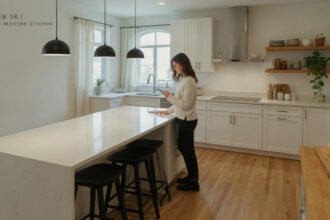
4. Add a Kitchen Island
A kitchen island can provide additional workspace, storage, seating, or all three.
Before installing an island, make sure there is enough room for people to move comfortably around it.
A compact island may work better in a smaller kitchen than a large central structure.
Depending on your needs, an island can include:
- Drawers
- Cabinets
- Seating
- Preparation space
- Sink
- Cooktop
- Electrical outlets
Avoid adding an island simply because it looks attractive. It should improve the functionality of the kitchen.
5. Choose the Right Countertop
Countertops need to balance appearance and durability.
When selecting a countertop, consider:
- Daily usage
- Maintenance
- Heat exposure
- Stain resistance
- Moisture
- Budget
- Overall design
Popular materials include natural stone, engineered stone, laminate, solid surfaces, and other modern materials.
The best choice depends on your lifestyle and how much maintenance you are comfortable with.
6. Upgrade Kitchen Lighting
Lighting can transform a kitchen.
A good lighting plan usually combines several types of lighting.
Ambient Lighting
Provides general illumination across the room.
Task Lighting
Helps illuminate work surfaces such as countertops and cooking areas.
Accent Lighting
Highlights architectural details, shelves, cabinets, or decorative features.
Under-cabinet lighting is particularly useful because it can improve visibility while preparing food.
Pendant lights can also add a decorative feature above an island or dining area.
7. Use a Modern Backsplash
A backsplash protects walls while adding visual interest.
Modern options include:
- Large-format tiles
- Subway tiles
- Natural stone
- Patterned tiles
- Glass
- Slab backsplashes
- Textured materials
A simple backsplash can create a timeless appearance, while a bold pattern can become a focal point.
Choose a material that is practical to clean and suitable for the cooking environment.
8. Select a Cohesive Color Palette
A coordinated color scheme can make a kitchen feel more sophisticated.
Neutral colors are popular because they work with many styles and can remain attractive for years.
Consider combinations such as:
- White and natural wood
- Gray and white
- Cream and warm wood
- Black and light wood
- Soft green and natural materials
- Beige and stone
Use stronger colors selectively rather than covering every surface with bold shades.
9. Mix Materials for Visual Interest
A modern kitchen does not have to use one material throughout.
Combining different textures can create depth.
For example:
- Wood cabinets
- Stone countertops
- Metal hardware
- Ceramic backsplash
- Glass lighting fixtures
The materials should complement one another rather than compete for attention.
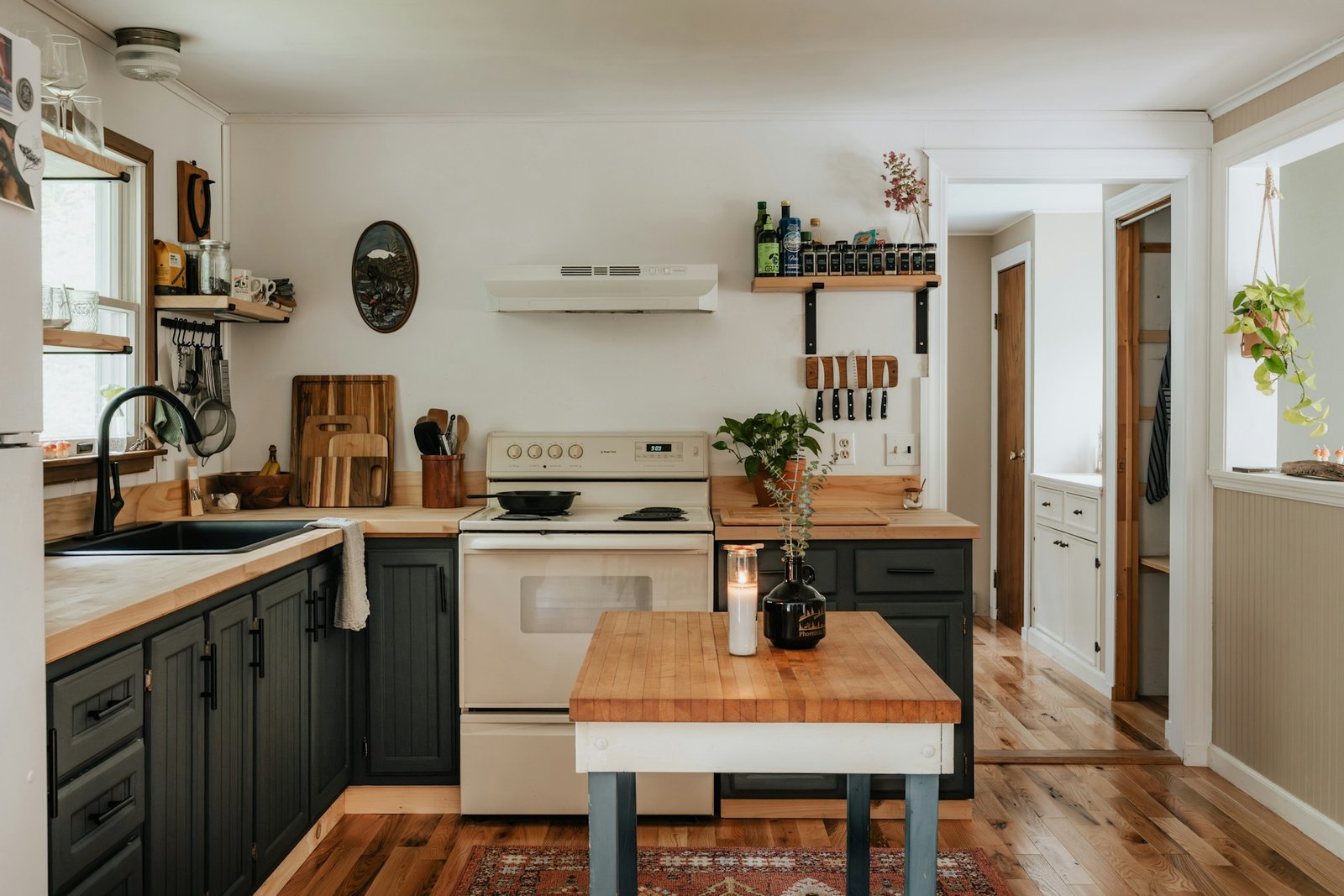
10. Consider Open Shelving
Open shelving can make a kitchen feel lighter and more open.
It can also provide quick access to frequently used dishes and cookware.
However, open shelves require organization because everything remains visible.
Use them for attractive and frequently used items rather than storing random objects.
If you prefer a cleaner appearance, closed cabinetry may be more practical.
11. Upgrade Kitchen Hardware
Replacing cabinet handles and drawer pulls is one of the easiest kitchen updates.
Modern hardware options include:
- Brushed metal
- Matte finishes
- Brass
- Black hardware
- Stainless steel
- Minimalist handles
Choose hardware that works with the faucet, lighting, appliances, and other metal elements in the room.
12. Choose Appliances Carefully
Kitchen appliances should fit both the design and practical needs of your household.
Before purchasing an appliance, consider:
- Size
- Energy efficiency
- Capacity
- Maintenance
- Features
- Noise
- Installation requirements
- Warranty
Built-in appliances can create a streamlined appearance, while freestanding appliances may provide greater flexibility.
Do not choose an appliance solely because it has the most features. Select functions you are likely to use.
13. Create an Efficient Pantry
A well-organized pantry can make everyday cooking much easier.
Group similar items together and keep frequently used products at eye level.
Use:
- Clear containers
- Labels
- Pull-out baskets
- Shelf risers
- Door organizers
- Stackable storage
Regularly check expiration dates and remove products you no longer need.
14. Use Vertical Space
If your kitchen has limited storage, use the available wall height.
Tall cabinets can provide additional storage without significantly increasing the kitchen footprint.
You can also use:
- Wall rails
- Hooks
- Narrow shelves
- Hanging organizers
- Tall pantry cabinets
However, avoid filling every wall with storage. Maintaining some open space helps preserve a clean appearance.
15. Create a Dedicated Coffee or Beverage Station
A small beverage station can make the kitchen more convenient.
Depending on your lifestyle, you could create an area for:
- Coffee machine
- Tea
- Cups
- Mugs
- Sugar
- Kettle
- Beverage accessories
Keeping these items together can reduce countertop clutter elsewhere.
16. Improve Kitchen Ventilation
Ventilation is an important but sometimes overlooked part of kitchen design.
Good ventilation helps remove cooking odors, moisture, smoke, and airborne particles.
A suitable range hood or ventilation system can contribute to a more comfortable kitchen.
For major ventilation work, consult a qualified professional to determine what system is appropriate for your home.
17. Make a Small Kitchen Feel Larger
Small kitchens can still feel modern and functional.
Try these strategies:
- Use light colors
- Keep countertops organized
- Install efficient storage
- Use reflective surfaces
- Maximize natural light
- Choose compact appliances
- Use vertical storage
- Avoid oversized furniture
A simple design with fewer visual distractions can make a small kitchen feel more spacious.
18. Create a Family-Friendly Kitchen
If your kitchen is used by the whole family, design it around everyday activities.
Keep frequently used items accessible while storing potentially hazardous items safely.
Provide enough workspace for multiple people where possible.
Durable surfaces and easy-to-clean materials can also make family kitchens easier to maintain.
19. Add Natural Elements
Natural materials can make a modern kitchen feel warmer.
Consider adding:
- Wood
- Stone
- Plants
- Woven accessories
- Natural fabrics
- Earthy colors
A few natural elements can soften a kitchen dominated by hard surfaces.
20. Add Seating
If space allows, kitchen seating can create a social area.
Options include:
- Island stools
- Counter-height chairs
- Breakfast benches
- Small dining tables
- Built-in seating
Make sure there is enough legroom and comfortable space around seating areas.
21. Keep Countertops Organized
One of the simplest modern kitchen design ideas is to keep countertops as clear as possible.
Store appliances and tools that you rarely use.
Keep only frequently used items on the counter.
A clean countertop can make the kitchen look larger and easier to maintain.
22. Add Smart Kitchen Features
Technology can make modern kitchens more convenient.
Depending on your needs, consider:
- Smart lighting
- Energy-monitoring appliances
- Smart ovens
- Touchless faucets
- Smart speakers
- Kitchen timers
- Connected appliances
Technology should improve convenience rather than complicate everyday tasks.
23. Choose Durable Flooring
Kitchen floors need to handle frequent traffic, spills, and regular cleaning.
When choosing flooring, consider:
- Durability
- Moisture resistance
- Slip resistance
- Cleaning requirements
- Comfort
- Appearance
Options vary widely, so choose according to your household and local conditions.
24. Add Personality With Décor
Modern kitchens can sometimes feel overly minimal.
Add personality with carefully selected décor such as:
- Artwork
- Plants
- Decorative bowls
- Cookbooks
- Textiles
- Ceramic pieces
Avoid excessive accessories because they can quickly create countertop clutter.
25. Plan Your Kitchen Budget
Before beginning a kitchen project, establish a realistic budget.
Divide expenses into categories such as:
| Kitchen Area | Examples |
|---|---|
| Cabinets | New cabinets or refinishing |
| Countertops | Stone, laminate, or other surfaces |
| Lighting | Ceiling, pendant, task lighting |
| Appliances | Refrigerator, oven, dishwasher |
| Flooring | Tile, wood, vinyl, etc. |
| Hardware | Handles, pulls, hinges |
| Backsplash | Tile, stone, glass |
| Labor | Installation and professional work |
Keep some budget available for unexpected expenses.
Common Kitchen Design Mistakes
Avoid these common problems:
- Poor traffic flow
- Insufficient storage
- Inadequate lighting
- Too little countertop space
- Oversized islands
- Too many open shelves
- Ignoring ventilation
- Choosing materials based only on appearance
- Not measuring appliances before installation
A kitchen should be designed around how it will actually be used.
Budget-Friendly Modern Kitchen Ideas
You do not always need a full renovation.
Try:
- Painting cabinets
- Replacing cabinet handles
- Updating lighting
- Adding a backsplash
- Installing new faucets
- Organizing drawers
- Adding shelves
- Repainting walls
- Replacing outdated décor
These improvements can refresh the kitchen without changing its entire structure.
Frequently Asked Questions
What makes a kitchen look modern?
Clean lines, practical storage, simple colors, appropriate lighting, streamlined hardware, and a balanced combination of materials can create a modern appearance.
What are the best modern kitchen design ideas for a small kitchen?
Focus on efficient storage, light colors, compact appliances, organized countertops, vertical storage, and appropriate lighting.
Is a kitchen island worth it?
A kitchen island can be useful when there is enough space. It can provide workspace, storage, seating, and social space.
What kitchen colors are timeless?
Neutral colors such as white, cream, beige, gray, and natural wood tones can provide a timeless foundation.
How can I update my kitchen without renovating?
Paint the cabinets, change hardware, improve lighting, update the faucet, organize storage, and add a new backsplash or decorative elements.
What type of lighting is best for a kitchen?
A combination of ambient, task, and accent lighting generally provides better functionality and flexibility than a single light source.
Conclusion
A successful modern kitchen should combine style, comfort, organization, and functionality. The best modern kitchen design ideas are those that make everyday activities easier while creating a space you enjoy spending time in.
Start by evaluating your current kitchen. Identify problems with storage, lighting, layout, or workflow and prioritize improvements that solve those issues.
Whether you are making small updates or planning a complete renovation, careful planning can help you create a kitchen that is practical, attractive, and suited to your lifestyle.